
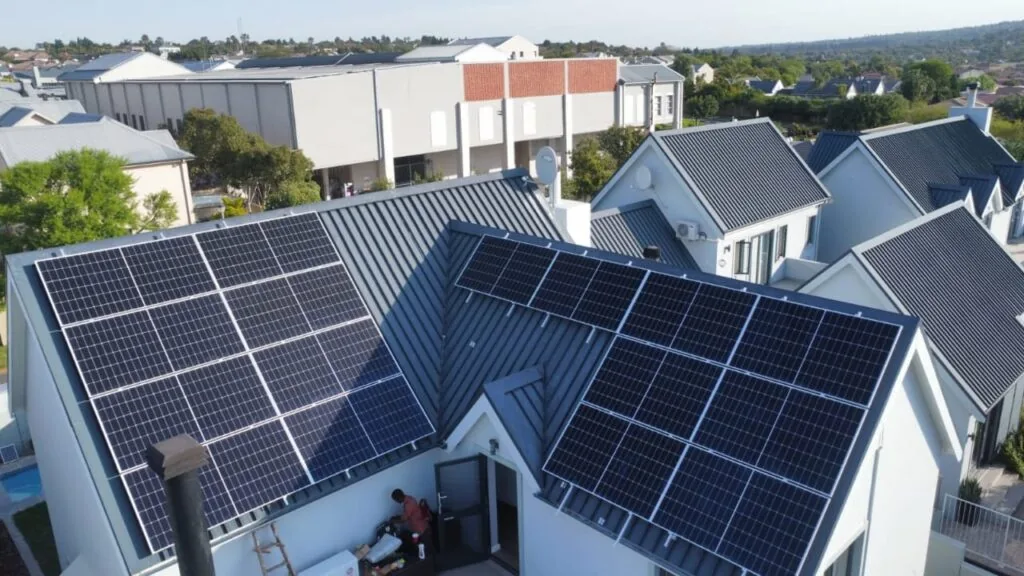
Start with what you want the system to do. If your priority is keeping Wi-Fi, lights and a fridge running during an outage, ask for an essential-load backup quote. If you also want to use less grid electricity during the day, ask how solar panels could cover part of your daytime demand. A Cape Town installer can compare those goals against your electricity use, roof and budget.
How do solar panels, an inverter and a battery work together?
Solar panels generate electricity during daylight. An inverter converts power into a form your home can use. A battery stores energy for later. A grid-tied solar system can still shut down during an outage. If you want backup, ask which circuits stay powered and how the system isolates them from the grid when supply fails.
How much battery backup does a Cape Town home need?
Make a list of essential appliances and estimate how long each needs to run during an outage. The inverter rating in kW tells you how much power it can deliver at a time. Usable battery capacity in kWh helps estimate how long it can keep supplying that load. A steady 400 W load over four hours uses about 1.6 kWh before system losses and reserve capacity. Fridges can briefly draw more power when starting, so ask your installer to account for peak demand as well as average use.
Separate essentials such as a router, fridge and a few lights from high-demand appliances such as a geyser, oven or electric heater. Bring a recent electricity bill and tell the installer which appliances need to run together. That gives them a better basis for sizing a system than monthly consumption alone.
What affects the cost of solar installation in Cape Town?
Ask for a written breakdown of the panels, inverter, usable battery capacity, labour and any distribution board work. Roof access, shading, cable routes and repairs to the existing installation can affect the quote. Ask whether the price includes testing, documentation and assistance with any applicable City application. Compare quotes based on the same backup circuits and expected runtime.
Check your electricity supplier and City approval requirements
Start by confirming who supplies your property. For properties supplied by the City of Cape Town, check the City’s embedded generation authorisation guidance before installation. The City covers solar PV and battery systems in its Going Solar guide. Ask your installer who is responsible for the application and which sign-off and documentation apply to your setup. If your property uses another electricity supplier, confirm its process directly.
Request a solar or battery backup quote
Share your Cape Town suburb, the appliances you want to keep running and whether you already have solar panels. BITO ELECTRICAL can discuss an installation or upgrade based on your property.